

Most e-commerce brands are focused on getting traffic: launching ads, running promos, driving clicks. But often ignoring a bigger problem: abandoned cart.
In more detail, 70% of online shopping carts are abandoned across the industry (Baymard Institute, 2025). That means the majority of your potential revenue doesn’t disappear because of bad products or weak ads. It disappears somewhere else.
This blog breaks down why cart abandonment still happens in 2025, why it’s costing you more than you think, and what modern brands are doing to recover those lost sales. The best part? You can fix this with simple solutions. Just a few smart tools and tactics can make so much difference.
What is Cart Abandonment?
Cart abandonment happens when a shopper adds items to their cart… and then disappears before checking out. It sounds small, but it adds up fast. Every abandoned cart is more than just a missed sale. It’s a lost opportunity, especially if you paid to bring that visitor in the first place.

Think about it: you already did the hard work. You ran the ads. You got the click. The shopper browsed, found something they liked, and hit “Add to Cart.” That’s real buying intent. But something stopped them from finishing. Understanding why they drop off is the first step toward fixing it.
Why Does Cart Abandonment Happen?
Most abandoned carts don’t happen by accident. In fact, research consistently shows that shoppers drop off for a few key reasons.
1. Friction in the Checkout Process
According to Baymard Institute, 19% of shoppers said they didn’t trust the site with their credit card information. Another 19% left because they were forced to create an account. Others gave up due to long, complicated checkout flows (18%), not enough payment methods (10%), or payment failures like declined cards (8%). These issues might seem small, but together they create a frustrating experience that kills conversions.
💡Quick fix: Simplify and secure the checkout process. Let shoppers check out as guests, reduce unnecessary steps, and offer trusted payment gateways.
2. Weak or No Follow-Up after Abandonment
Not every shopper is ready to buy right at the moment. Some are just browsing. In fact, 43% of US online shoppers have abandoned a cart within the last 3 months because “I was just browsing / not ready to buy” (Baymard Institute, 2025). But instead of giving them a timely nudge or answering their questions, many brands still rely on a general abandoned cart email (if they even follow up at all). That’s a missed opportunity.
💡Quick fix: Use real-time, contextual follow-up. Reach out through live chat or direct messages while shoppers are still active on the platforms they use most, especially using Facebook Messenger automation.
3. Extra Costs Feel Too High
Shipping fees, taxes, or service charges can also cause shoppers to abandon. 39% cite unexpected costs as their main reason for leaving, according to Baymard Institute. While these fees are often unavoidable, a smarter pricing strategy will help avoid this feeling.
💡Quick fix: Offer reward programs that offset these extras, or clearly show the total cost earlier in the buying process.
Why is Cart Abandonment a Big Problem?
Cart abandonment isn’t just a conversion issue. It’s a revenue leak hiding in plain sight. And in 2025, it’s more costly than ever.
With paid traffic on platforms like Meta and Google becoming increasingly expensive, every visitor who adds an item to their cart and leaves without buying represents wasted ad spend. You’ve already paid to bring them in. Letting them walk away without a follow-up means burning budget that could have been converted.
The problem is that most e-commerce brands pour resources into acquisition (driving clicks, running campaigns, building audiences) but spend far less on abandoned cart recovery. That’s a cost imbalance.
Take a simple scenario: You get 1,000 clicks from an ad. 5% of those visitors add something to their cart. Only 1% complete the checkout. That means for every one customer who buys, four more came close and walked away.
And these aren’t cold leads. They’re high-intent shoppers who just need the right nudge. The right move, therefore, is not to focus only on how to get more people in the funnel, but to start fixing the holes at the bottom of it.
Smarter Ways to Recover Abandoned Carts in 2025
Most ecommerce brands still rely on the same old tactic: send an abandoned cart email and hope for the best. But in 2025, recovery requires a multi-channel, real-time approach, one that meets customers where they are.
1. Let Customers Check Out Directly on Meta Platforms
Meta now supports checkout directly inside Messenger, Instagram, and WhatsApp. That means shoppers can go from product discovery to purchase without ever leaving the app. No redirects. No long forms. Just a trusted platform with fewer steps to drop off.
💡Tips: Enable Meta Shops or integrated checkout to shorten the buying journey and increase completion rates.
2. Add Live Chat for Real-Time Help and Follow-Up
Many abandonments happen because the customer had a question about sizing, delivery, or stock. And no one was there to answer it. Live chat fills that gap. But its power goes beyond just support. You can also use chat to follow up with cart abandoners on the same channel they last interacted on, Messenger, IG DMs, or even Line. That feels less like a sales push and more like helpful timing.
💡Tips: Don’t forget to segment your follow-ups, and do it at the right timing to avoid disturbing your customers. Make sure your follow-up messages are in compliance with the platform policies.
3. Offer a Rewards Program to Boost Loyalty
Sometimes, customers abandon not because of friction, but because they’re still price-sensitive or not fully sold on you versus a competitor. A good rewards program changes that. When buyers know they’ll earn points or future discounts, they’re more likely to convert now and keep coming back.
💡Tips: Pair your rewards program with chat or DMs to remind customers what they’re earning, right where they’re most active.
Why Smax AI is Your Perfect Solution
Even though the solution is rather simple, solving cart abandonment can be a big burden. Especially when you need to handle both checkout friction and follow-up gaps, at scale, and across all your channels. That’s exactly where Smax AI comes in.
Smax AI’s Remarketing Automation Tools help brands recover lost sales without adding extra workload to your team. It’s designed to follow up with high-intent shoppers across Messenger, Instagram, WhatsApp, and more, with the right message, at the right time, in compliance with the platforms.
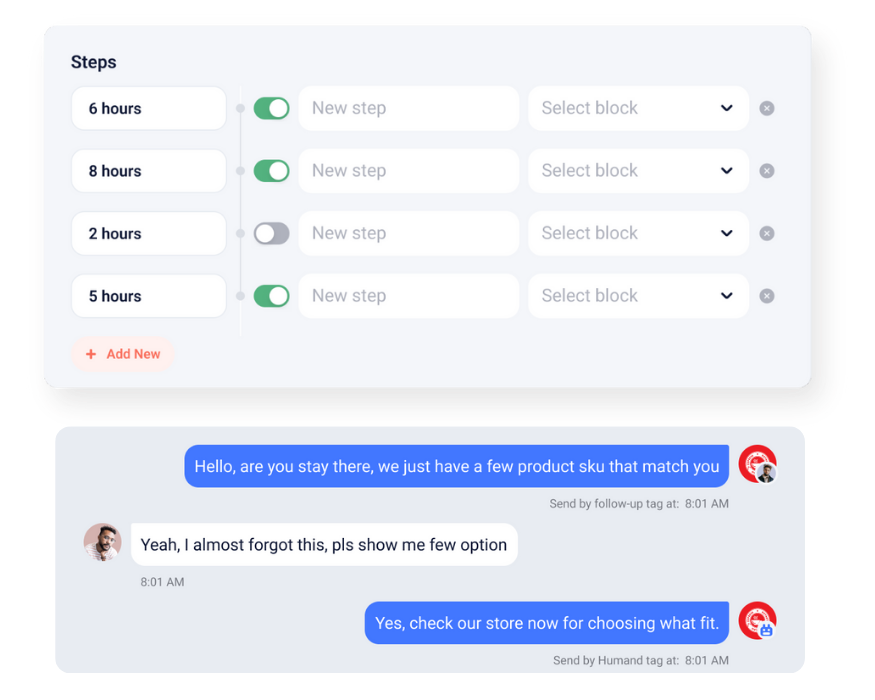
Here’s how it works:
- Customer added to cart but didn’t check out? → Smax AI sends a gentle nudge 1 hour later.
- Customer asked a product question in Messenger? → Smax AI offers a helpful reply + checkout link the next day.
- Customer clicked your ad but didn’t convert? → Smax AI follows up on the same platform they came from.
It’s not just smart. It’s on automation. You can set it up once, monitor performance, and let Smax AI handle the rest. No manual chasing. No overworked sales reps. And best of all? You can start for free → Try Smax AI Remarketing Tool
Stop Losing Sales You Already Earned
Cart abandonment isn’t just a metric. It’s a sign that something broke between interest and action. And in 2025, with rising ad costs, you can’t afford to ignore it.
The good news? Fixing it doesn’t require reinventing your entire store. With the right tools (For example: Smax AI’s Remarketing Automation Tools), abandoned cart can be fixed in a simple and scalable way. So you recover more carts, save more ad spend, and finally close the loop on sales you almost won.
What other tools have you been using? Chat with us, let’s make sure you’re not leaving money on the table.